Upstate SC Real Estate News & Market Info

You’ll find our blog to be a wealth of information, covering everything from local market info and statistics to community happenings. That’s because we care about the community and want to help you find your place in it. Please reach out if you have any questions at all. We’d love to talk with you!

July 6, 2026

Should I Renovate My Home Before I Sell It?


Wouldn’t it be great if every real estate question came with a simple, one-word answer?

The reality is, most questions about buying and selling homes have a two-word answer: It depends. Whether you should renovate your home before putting it on the market is no exception. It’s a common dilemma, but you don’t have to figure it out alone. Our team is here to break down the ins and outs of pre-sale renovations so you can confidently make the right move for your timeline and your wallet.

Here are a few key factors we always recommend considering before you pick up a sledgehammer.

Is Your Goal to Add Value?

Let’s start by defining the ultimate goal of your potential renovations. It only makes sense to renovate before selling if the project is highly likely to add value to the home—meaning it will make the property more competitive, net you higher offers, or help it sell faster.

So, how do we determine if a renovation will actually put more money back in your pocket?

  • The Local Market Dynamics: In a hot seller’s market, buyers are often willing to overlook dated features just to secure a home, reducing your need to renovate. In contrast, a buyer’s market means you need to do a bit more legwork to stand out against the competition.

  • Expert Insight: The best way to gauge exactly where your local neighborhood sits on this spectrum is to talk directly with us. Our team tracks local market trends daily, so we can give you real-time context on what buyers in your specific area are looking for right now.


Which Projects Actually Add Value?

Once we look at your local market conditions, we can start choosing which renovation projects make the most sense for your specific property.

According to the latest Cost vs. Value Report from the Journal of Light Construction, the projects with the highest average Return on Investment (ROI) include garage door replacements, siding replacements, window upgrades, and minor kitchen remodels. However, just because a project ranks high on a national list doesn’t mean it’s the right choice for your house.

Before investing a single dollar, we always help our clients weigh three things:

  1. Your home’s current condition.

  2. How does it compare to neighboring homes currently on the market?

  3. Whether local buyer demand justifies the expense.


Kitchens and Bathrooms: Small Changes, Big Impact

It’s a common refrain in real estate that kitchens and bathrooms sell homes. But does that mean you should embark on a massive gut-remodel? Usually, no.

If your kitchen or bath is severely outdated, we often recommend targeting minor, high-impact improvements rather than a full overhaul. In fact, a minor kitchen remodel consistently delivers a much higher ROI than a major one, with homeowners recouping an average of 109% of their costs.

Instead of a total demo, our team often suggests quick, cost-effective swaps:

  • Swapping laminate countertops for quartz.

  • Trading an outdated kitchen sink for a popular farmhouse sink.

  • Updating a dated backsplash with inexpensive, classic subway tile.

The Power of Strategic DIY

Small, inexpensive tweaks can add serious visual value to your home. If you enjoy DIY projects, taking them on yourself cuts out labor costs and boosts your bottom line. The key here is to be strategic—only take on what you can realistically finish beautifully and on schedule.

Here are a few DIY wins we love to see:

  • Never underestimate the power of paint: Painting dated kitchen cabinets or a bathroom vanity an on-trend color can completely transform the room for the cost of a few cans of paint.

  • Accessible flooring upgrades: Luxury vinyl plank (LVP) flooring is highly popular, durable, and accessible for DIYers. It can often be installed right on top of old ceramic tile, saving you the mess and cost of demolition.

  • Modernize the hardware: If you want the absolute most bang for your buck, replace old drawer pulls, light fixtures, and towel racks. Updating these minor details brings your home into this century and ensures a fantastic first impression.


Let’s Schedule a "Home Physical" Before You Start

Before you buy materials or hire a contractor, let's connect! We can walk through your home together and advise you exactly which projects will yield the highest ROI—and which ones you can safely skip.

Whether you’re planning to list your home next month or you're just planning for the future, our team is here to help you make smart, wealth-building decisions.


Ready to get an expert opinion on your home's value? Reach out to us today!

Contact Our Team:


Sheila Newton Team/ Howard Hanna Allen Tate Real Estate

Office: (864)225-1205

Mobile: (864)940-6377


Email: SheilaNewtonTeam@gmail.com
WeSellUpstateSC.com


July 3, 2026

Living in a Magazine: How to Stage Your Home (While Actually Living in It)

We’ve all experienced it. You walk into a professionally staged home, and it’s an absolute dream. The air smells like a luxury spa, the lighting is flawless, the kitchen counters are completely bare, and the throw pillows look like they were artfully tossed by a master designer. It belongs on a magazine cover.

Then, reality hits.

If you’re getting ready to put your home on the market, you’re suddenly facing a wild challenge: maintaining that pristine, museum-like aesthetic while simultaneously packing school lunches, tripping over dog toys, keeping up with homework, and rushing out the door for work. Trying to live in a staged home can feel like trying to walk through a pristine snowbank without leaving a single footprint.

The good news? You don’t have to choose between your sanity and a top-dollar sale. By understanding a little bit of buyer psychology and setting up a few quick daily habits, you can keep your home completely show-ready without moving into a hotel.

Here is how to master the art of the "lived-in" stage.

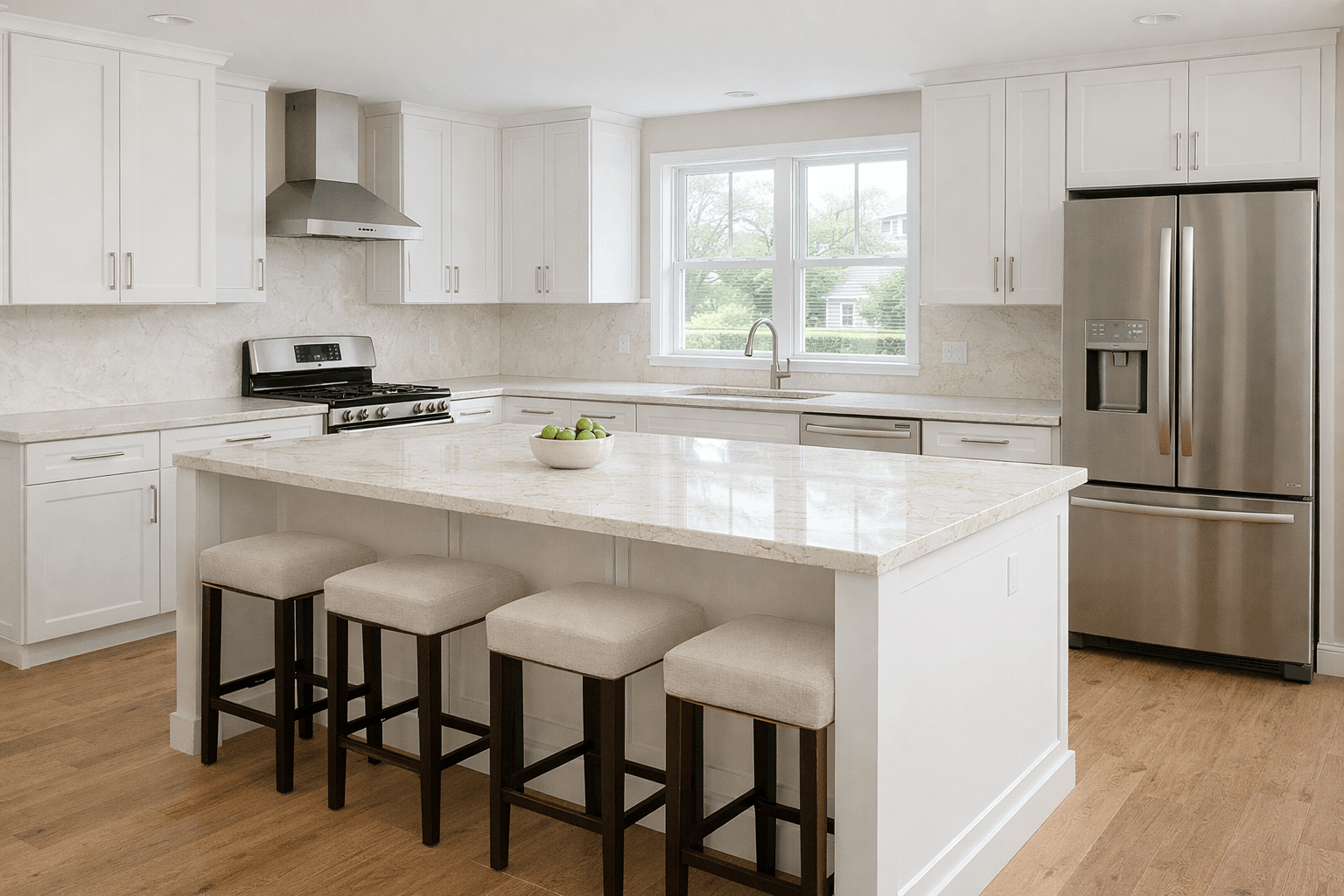
Bright, modern staged kitchen with clean countertops and minimalist decor

The Staging Payoff: Why the Hassle is Worth It

Before we talk about tactics, let’s remind ourselves why we do this. Staging isn't just about pretty rooms; it’s a strategic move to protect your hard-earned equity.

Industry data shows that over 80% of buyers' agents say staging makes it vastly easier for buyers to visualize a property as their future home. Even better? Staged homes consistently sell much faster and can bring in anywhere from a 5% to 15% return over asking price.

When you look at it that way, a little extra daily tidying is a massive return on your time.

1. Master the "Two-Minute Drill" Basket System

The ultimate enemy of a staged home is daily surface clutter. Keys, mail, school papers, and shoes have a magnetic attraction to your kitchen island and entryway tables.

To beat this, grab a few decorative, lidded baskets or canvas bins—one for each family member. During the day, if something gets left out, it goes straight into that person’s designated basket.

When your agent calls with a last-minute showing request, you don’t have to panic. Just pop the lids on the baskets, slide them into a closet or throw them in the trunk of your car, and hit the road. You’ve just turned a chaotic 30-minute deep clean into a calm, two-minute sweep.

2. Enforce the "Fake" Kitchen Rule

In real life, your kitchen counters are a hardworking hub for coffee makers, blenders, knife blocks, and dish racks. In a staged kitchen, the counters are a minimalist paradise—maybe featuring a single bowl of crisp green apples or a cookbook open to a gorgeous recipe.

While your home is active on the market, create a temporary "appliance garage." Pack away anything you don’t use every single day. For your absolute essentials (like the morning coffee maker), get into the habit of tucking them into a lower cabinet the second they cool down.

When a buyer sees vast, wide-open countertops, their brain instantly translates that into: "Wow, this kitchen has so much space!"

3. Create the "Show-Only" Bathroom Illusion

Bathrooms are incredibly personal, and buyers are highly sensitive to signs of everyday life there. Keep your daily toothbrushes, makeup, and skincare items in a portable caddy beneath the sink so they can vanish in five seconds flat.

Next, buy a set of high-quality, plush, bright white towels reserved exclusively for showings. Keep your everyday towels hidden away. When a buyer is on the way, hang up your pristine "show towels," do a quick swipe of the fixtures with a microfiber cloth, close the shower curtain, and walk away. You’ve just created an instant luxury hotel vibe.

Don’t Forget the Handshake: Curb Appeal Staging

A buyer begins judging your home the exact second their car pulls up to the curb. In fact, premium landscaping and strong curb appeal can boost a home’s perceived value by up to 10% to 12%.

You don’t need a massive, expensive landscaping overhaul to make a great first impression. You can transform your exterior over a single weekend with a few high-impact fixes:

  • The Front Door Facelift: Give your front door a fresh coat of a bold, welcoming paint color. Swap out any dated, tarnished house numbers or locksets with crisp, modern hardware.

  • The Welcoming Entry: Power-wash your front porch and walkway, then lay down a fresh, oversized welcome mat. Frame the front door with a couple of matching, colorful planters filled with low-maintenance flowers.

  • Crisp Borders: Toss a fresh layer of dark mulch into your front garden beds and use an edger to create clean, sharp lines along your driveway and grass. It screams "meticulously maintained" before the buyer even steps inside.

Your Winning Game Plan

Living in a staged home definitely takes a little temporary discipline, but the financial reward at the closing table makes it all worthwhile. By treating your house like a premium product and using these quick daily shortcuts, you'll keep your home in that lucrative, fast-moving sweet spot of the market.

Curious about which staging updates will bring the highest return for your specific home? Connect with our team at Sheila Newton Team | Howard Hanna Allen Tate today for a complimentary home consultation. We’re here to help you make the right move!

June 11, 2026

Goodbye, Noise! Why Upstate SC Homeowners are Dumping the Open Concept

Goodbye, Noise! Why Upstate SC Homeowners are Dumping the Open Concept

If you spent any time watching home renovation shows or house hunting over the last twenty-five years, you already know the unofficial rule of modern real estate: knock down every single wall possible.

When I’m out touring properties with buyers across Anderson, Greenville, and the greater Upstate area, if the home didn't have wide-open spaces, it was an absolute dealbreaker. Everyone wanted to walk through the front door and see straight through the living room, into the kitchen, and all the way to the back deck.

But if we’re being completely honest? Living in a giant, open box isn’t all it’s cracked up to be.

Wide open concept homes

Lately, I’m seeing a massive shift in what local buyers are actually looking for. While no one wants to go back to the dark, claustrophobic floor plans of the 1970s, people are getting thoroughly exhausted by the lack of privacy and the constant noise that comes with wide-open living.

Think about it: when there are zero boundaries, your noisy kitchen blender competes with the living room television, a pile of dirty dinner dishes is always on display to your guests, and finding a quiet spot to take a Zoom call for work feels like an impossible task.

Welcome to the "Broken Floor Plan" Revolution

Instead of tearing down every piece of drywall, the newest design movement taking over the Carolinas is all about purposeful boundaries.

A broken floor plan keeps that bright, breezy, connected feeling we all love, but it uses smart architectural details to carve out distinct zones for sound control, privacy, and day-to-day functionality.

It’s a hybrid approach to layout design, and it’s quickly becoming one of the most requested features from buyers browsing the current market.

open without being totally open concepts

Smart Ways to Separate Your Space (Without Making it Dark)

If you love the look of an open home but desperately need some functional boundaries, you don't have to build solid walls and install standard doors. Here is how modern designers are pulling off this look:

  • Arches and Extra-Wide Cased Openings: Instead of completely leveling the wall between your kitchen and dining room, leave a wide, framed opening or an elegant archway. It keeps the traffic flowing smoothly but visually signals where one room ends and the next begins.

  • Glass Walls and Metal-Framed Doors: This is an incredible option for home offices or playrooms. Putting up a glass partition allows natural Upstate sunlight to pass straight through the house, but gives you total acoustic silence the second you shut the door.

  • Varying Your Ceilings: You can create a psychological boundary without touching the floor plan at all. Dropping the ceiling height slightly over a dining area or adding a beautiful coffered ceiling in the family room instantly gives each space its own distinct identity.

  • Half Walls and Custom Built-Ins: A low partition wall between a kitchen and a sitting area gives you a perfect place to back a sofa against or add extra cabinet storage, all while keeping your sightlines clear.


What This Layout Shift Means for Upstate Sellers

If you are thinking about selling your home in the near future, how your space is laid out plays a massive role in your final bottom line.

Today's buyers aren't just looking for square footage—they are looking for functionality. With so many people working from home or managing busy, multi-generational households, properties that feature smart, dedicated zones are commanding a premium.

Before you start planning a major pre-listing remodel or pulling permits to rip out a wall, let’s sit down and chat! As part of the Sheila Newton Team here at Howard Hanna Allen Tate, I monitor exactly what local buyers are paying a premium for in our market every single day. I can help you evaluate your home's current layout, maximize your equity, and make sure your property hits the market perfectly positioned to sell.


Curious how your home's layout stacks up against current buyer trends in Anderson, Greenville, or any of the Upstate SC area? Call or text me directly at (864) 940-6377—let's look at the numbers and plan your next move!

June 5, 2026

Curious About Local Real Estate?

Receive the Latest Local Market Stats

Curious about local real estate? So are we! Every month we review trends in our real estate market and consider the number of homes on the market in each price tier, the amount of time particular homes have been listed for sale, specific neighborhood trends, the median price and square footage of each home sold and so much more. We’d love to invite you to do the same!

Get Local Market Reports Sent Directly to You

You can sign up here to receive your own market report, delivered as often as you like! It contains current information on pending, active and just sold properties so you can see actual homes in your neighborhood. You can review your area on a larger scale, as well, by refining your search to include properties across the city or county. As you notice price and size trends, please contact us for clarification or to have any questions answered.

We can definitely fill you in on details that are not listed on the report and help you determine the best home for you. If you are wondering if now is the time to sell, please try out our INSTANT home value tool. You’ll get an estimate on the value of your property in today’s market. Either way, we hope to hear from you soon as you get to know our neighborhoods and local real estate market better.

Posted in Market Updates
Jan. 23, 2026

Unlock the Power of Your Home Equity: How to Downsize and Buy Your Next Home in Cash


If you’ve been thinking about downsizing but keep putting it off, your current home equity may be the key to finally making that move. Many homeowners are surprised to learn just how much equity they’ve built up—and how that equity can help them purchase their next home outright, with no mortgage at all.

In today’s real estate market, a growing number of sellers are using the profits from their home sale to buy their next property in all cash. As a result, they’re enjoying powerful advantages in a competitive market and greater financial freedom in the next chapter of their lives.

What Is Home Equity—and Why Does It Matter When Downsizing?

Home equity is the difference between your home’s current market value and what you still owe on your mortgage. Over time, your equity can grow through:

  • Paying down your mortgage balance
  • Rising home values in your area
  • Improvements or renovations that increase your home’s value

If you’ve owned your home for several years, there’s a good chance you’ve built significant equity. When you decide to sell, that equity can become the cash you use to purchase a smaller, more manageable home—without taking on a new loan.

The Big Benefits of Buying Your Next Home in Cash

Downsizing and using your equity to buy your next home in cash comes with several major advantages:

  1. Stronger, More Attractive Offer - Cash offers often stand out to sellers because they come with fewer financing uncertainties. When you don’t have to wait on lender approvals, appraisals, and underwriting, your offer can look both cleaner and more reliable.
  2. Faster, Smoother Closing - Without a mortgage lender involved, the closing process can move much more quickly. This can be especially appealing if you’re coordinating the sale of your current home with the purchase of your next one, or if you’re looking to relocate on a specific timeline.

  3. No Monthly Mortgage Payment - Imagine settling into your new home without a mortgage bill each month. For many downsizers, this is one of the biggest lifestyle perks—freeing up cash flow for travel, hobbies, savings, or simply enjoying a less stressful financial picture.

  4. Potential Long-Term Savings - Without interest payments over the life of a loan, you may save a substantial amount of money in the long run. Even if you choose to keep some of your funds invested rather than pay 100% cash, having the option gives you greater control over your financial strategy.

Is Downsizing Right for You?

Downsizing isn’t just about moving into a smaller space. It can also mean:

  • Choosing a single-story home for easier living
  • Moving closer to family, healthcare, or amenities
  • Reducing maintenance responsibilities and utility costs
  • Transitioning to a lifestyle community or low-maintenance condo
When paired with strong home equity, downsizing can help you simplify your life, lower your monthly expenses, and step into a home that truly fits your current and future needs.

How to Find Out How Much Equity You Really Have

Many homeowners underestimate how much their property is worth in today’s market. Online estimates can be helpful, but they’re often rough and may not reflect current local trends, recent renovations, or unique features of your home.

To get a clear picture of your equity and purchasing power:

  1. Request a Professional Home Valuation - A local real estate expert can analyze recent comparable sales, current buyer demand, and your home’s condition to provide an accurate estimate of your market value.
  2. Review Your Mortgage Balance - Check your most recent mortgage statement to see how much you still owe.

  3. Calculate Your Estimated Net Proceeds - Your agent can help you estimate selling costs and your potential net from the sale—giving you a realistic idea of how much cash you could bring to your next purchase.

Ready to Explore Buying Your Next Home in Cash?

If you’ve been waiting for the “right time” to downsize, your current equity may mean that time is now. With record levels of equity and strong buyer demand in many markets, you may be closer than you think to buying your next home in all cash and enjoying a more comfortable, simplified lifestyle.


The next step is simple: Connect with our team to:

  • Assess how much equity you have
  • Explore downsizing options in your preferred area
  • Build a personalized plan to sell and buy with confidence


Your current home may hold the key to your next chapter—and it could be a chapter without a mortgage payment.           

Nov. 4, 2025

Your Home Didn’t Sell? Here’s What to Do Next – Advice from the Sheila Newton Team

Your Home Didn’t Sell? Here’s What to Do Next – Advice from the Sheila Newton Team

We understand how discouraging it can feel when your home doesn’t sell as planned. At Sheila Newton Team Realtors, we’ve seen the time, effort, and heart our clients pour into their homes and the selling process. When a listing expires without a buyer, it’s natural to feel frustrated or even embarrassed. But here’s the good news: you’re not alone, and there are practical steps you can take to turn things around.

A Fresh Start Means New Opportunity

Did you know that more than 70% of homeowners who re-list with a different agent successfully sell their homes? When sellers stick with the same approach, that number drops to about 50%. That means making a change—whether it’s your pricing, presentation, or team—can make all the difference in achieving your real estate goals.

If your previous listing fell short, don’t be discouraged. Let’s look at some of the most common reasons a home doesn’t sell—and how the right strategy can deliver new results.

1. Pricing: Finding the Sweet Spot

Pricing strategy is more important than ever, especially with today’s interest rates affecting buyers and their budgets. Even a slightly overpriced home may struggle to attract attention, and once a listing becomes “stale,” it’s hard to recapture that initial buzz.

What can we do? The Sheila Newton Team will analyze recent sales in your area and review buyer feedback to determine a price that accurately reflects the true market value. In fact, pricing at or just below the current market value can generate far more interest and lead to multiple offers—often resulting in a better outcome for you.

2. Presentation: Create a Lasting First Impression

First impressions are everything! If photos didn’t shine, staging was minimal, or small updates were overlooked, buyers may have scrolled right by. Even details like paint color or simple repairs can make a powerful impact.

How do we help? Our team will walk through your home with a critical, yet caring eye—just like a potential buyer would. Sometimes small changes—removing dated decor, adding fresh linens, or a coat of neutral paint—are all it takes to captivate today’s buyers.

3. Marketing: Maximize Your Home’s Exposure

In today’s market in Upstate SC, successful home sales require more than a sign in the yard or a few online ads. Effective marketing leverages technology and creativity: targeted social media, custom video tours, and professional digital campaigns.

How do we do it? We use leading-edge marketing to ensure your listing stands out. We get your home in front of the right buyers, right when they’re searching.

4. Negotiation: Flexibility Makes the Difference

Successful sales often come down to flexible, thoughtful negotiation. Sometimes deals stall if sellers aren’t open to working with buyers on things like closing costs or inspection repairs.

Let’s be practical. With home values up significantly in recent years, you likely have some flexibility. Our experience ensures we advocate for your best outcome, while knowing how to bring both sides together for a win-win.

Ready to Get Moving? We’re Here to Help.

If your home hasn’t sold, you don’t need to start over—you just need a smarter approach. Choosing the right team, with proven strategies and a caring, hands-on attitude, can make all the difference.

Over 70% of sellers who switch agents find success the second time around. We’d be honored to guide you through your next steps, answer your questions, and deliver the results you deserve. Reach out to Sheila Newton Team today, and let’s get your move back on track!

July 25, 2025

Why Homeownership Is Going To Be Worth It: More Than Just a House


Life can feel a bit unpredictable these days. What’s happening with inflation? The economy? The housing market? But in the middle of all that uncertainty, there’s one thing a lot of people still crave – a place to call their own.


Because when everything else feels like it's up in the air, home can be the thing that grounds you.


Here’s what owning a home can mean for you, especially right now.


Freedom To Make It Yours: When you’re a homeowner, you don’t need to ask permission to paint a wall, hang a gallery of your favorite art, or redo the floors. You have the freedom to create a space that reflects who you are, all the way from the light fixtures to the paint colors.


Pro Tip: Just be mindful about exterior changes if you buy a home in a community that has a homeowner’s association (HOA). You may need to obtain some approvals for certain outdoor changes.


More Privacy, More Peace: Owning your home can give you a sense of peace you didn’t even realize you were missing. It’s a comfortable place where you feel secure and can relax, enjoy your privacy, and unwind after a long day.


Room To Grow: Whether it’s starting a family, setting up a home office for your new career, or finally building that home gym in the garage so you can hit your fitness goals, owning gives you the space to live life on your terms.


A Stronger Sense of Community: When you own, you’re not just passing through; you’re putting down roots. That often leads to stronger ties with your community, more connection to your neighborhood, and a deeper feeling of belonging where you live. That’s very different from the temporary nature of renting.


A Feeling of Accomplishment: There’s something powerful about getting the keys and walking into your own front door for the first time. It’s more than pride, it’s personal satisfaction. A quiet and meaningful sense of “I did this.”


Sure, it’s not always easy for first-time homebuyers right now. The market today requires patience, strategy, and sometimes a little creative problem-solving. But it’s still worth it. As Realtor.com says: “Buying a home is a major commitment, but it’s also incredibly rewarding.”


When you get those keys in your hand, when you realize this place is where your life gets to unfold, it clicks. The stress, the waiting, the planning – all of it led you home.


There are a lot of things out of your control right now. But building a life in a space that’s truly yours? That’s still possible with the right strategy and expert help. Give us a call today to find out how to make it happen.


What would it mean for you to finally have a place to call your own?


July 19, 2025

Understanding Homeowners Associations (HOAs)

Homeowners Associations play a significant role in many housing markets, impacting both the homebuying process and the ongoing experience of ownership. Here’s essential information for prospective buyers considering a property in an HOA community:


What Are HOAs?

Homeowners Associations are organizations established within residential communities to create and enforce regulations that govern properties and residents. These associations often provide residents access to shared amenities, such as:

  • Pools
  • Clubhouses
  • Parks
  • Walking trails

HOAs typically function as governing bodies that focus on the maintenance and improvement of common areas, ensuring a cohesive living environment. While commonly associated with master-planned neighborhoods and gated communities, community associations can also oversee townhouses and condominiums.


Understanding HOA Fees and Special Assessments

Residents in HOA-managed communities are assessed monthly fees, typically covering costs like:

  • Landscaping and routine maintenance
  • Upkeep of shared amenities
  • Neighborhood operational expenses

Fees might be billed quarterly or annually, depending on the association’s policies. Additionally, HOAs can impose special assessments for unexpected expenses or significant projects that exceed budgeted reserves. It’s crucial for prospective buyers to factor these costs into their budgeting for homeownership.


Who Runs HOAs?

Most HOAs are non-profit organizations administered by volunteer boards composed of residents. Engaging in your local HOA can provide valuable insights into its operations and the opportunity to influence community decisions. Each HOA adheres to specific bylaws that dictate:

  • Election procedures
  • Board member duties
  • Meeting protocols

Participation in the HOA is a great way to enhance your connection to the community.


Types of Rules Enforced by HOAs

HOAs uphold various rules through Covenants, Conditions, and Restrictions (CC&Rs), which help maintain aesthetics and property values. Common areas of regulation might include:

  • Landscaping guidelines
  • Noise restrictions
  • Parking rules
  • Pet policies
  • Home exterior modifications

It’s important to note that HOA rules cannot override local, state, or federal laws, ensuring a balance between community governance and legal rights.


Benefits and Drawbacks of HOAs

Benefits:

  • Access to amenities and recreational facilities
  • Enhanced security measures
  • Maintenance support for common areas

Drawbacks:

  • Monthly fees and potential special assessments can add to financial obligations
  • Regulations may feel restrictive to some homeowners


Evaluating whether an HOA aligns with your lifestyle and preferences is essential. As your real estate agent, we can assist you in determining if an HOA community is the right fit based on your personal needs and goals.


In summary, understanding the role of homeowners' associations is crucial when buying a home. From potential fees to rules enforcement, getting well-informed helps ensure you choose a community that suits your lifestyle.


June 23, 2025

Navigating the Anderson & Greenville Real Estate Market: Understanding Buyer's vs. Seller's Markets

As your local real estate experts, we know that buying a home in Anderson, Greenville, and the surrounding South Carolina areas is one of the biggest financial decisions you'll make. And just like the weather, the real estate market is constantly changing. Understanding whether we're in a "buyer's market" or a "seller's market" can truly empower you to make smarter, more confident moves. Let's break down what each means for you.

What is a Buyer's Market?

Imagine a buffet with plenty of delicious options and not too many hungry guests – that's a buyer's market! In real estate terms, it means there are more homes available for sale than there are active buyers.

What this means for you, the buyer:

  • More Choices: You'll have a wider selection of homes to explore, giving you more flexibility to find exactly what you're looking for.
  • More Time: Less competition often means you won't feel rushed to make an offer, allowing for more thoughtful decision-making.
  • Negotiating Power: With more inventory, sellers may be more open to negotiations on price, repairs, or other terms. You might even see price reductions or incentives.

What is a Seller's Market?

Now, picture that same buffet, but with more hungry guests than food! In a seller's market, there are fewer homes available than there are eager buyers. This creates a highly competitive environment where homes often sell quickly and sometimes even above their asking price. For buyers, this means:

What this means for you, the buyer:

  • Increased Competition: You'll likely face more competition from other buyers, which can lead to bidding wars.
  • Faster Decisions: Homes tend to sell quickly, sometimes within days, meaning you need to be prepared to act fast when you find a home you love.
  • Stronger Offers: To stand out, you might need to make a highly competitive offer, potentially above the asking price, and consider more favorable terms for the seller.

How Can You Tell Which Market We're In?

As your local real estate experts, we constantly monitor the pulse of the Anderson, Greenville, and surrounding SC markets. Key indicators include:

  • Pace of Sales: How quickly are homes going under contract? In a hot seller's market, homes fly off the market.
  • Inventory Levels: How many homes are currently available? A low number suggests a seller's market, while a higher number points to a buyer's market.
  • Sale Price vs. List Price: Are homes selling above, at, or below their asking price? This gives us a clear picture of demand.

We can help you interpret these trends in your specific neighborhood or desired area and explain how they impact your home search goals.

What Should Buyers Do in a Seller's Market?

If you find yourself house hunting in a competitive seller's market in Upstate SC, here’s how to put your best foot forward:

  • Get Pre-Approved (Not Just Pre-Qualified!): A strong mortgage pre-approval letter shows sellers you're a serious and qualified buyer.
  • Be Ready to Move Quickly: When a great listing pops up, don't hesitate. Schedule showings promptly and be prepared to make an offer.
  • Craft a Strong Offer: Work with us to make your offer as appealing as possible. Beyond price, consider flexible closing dates, a quick inspection period, or even a strong earnest money deposit to make your offer more attractive. Be cautious about waiving contingencies without professional advice, but understand it can strengthen an offer.
  • Set Your Budget and Walk-Away Point: In a fast-paced market, it's easy to get caught up in the excitement. Knowing your financial limits beforehand will prevent overextension.
  • Work with an Expert Buyer's Agent: This is where we come in! Our team knows how to navigate competitive markets, write winning offers, and advocate for your best interests.

Should I Wait for a "Better" Market?

Trying to perfectly "time the market" is incredibly difficult, even for seasoned professionals. More often than not, personal factors are far more important than short-term market fluctuations. Are you ready for a lifestyle change? Is your financial situation stable? Do you have long-term plans for your next home?

If you're prepared and ready to make a move, working with a trusted professional like our team can help you navigate whatever market conditions we're in and make the absolute best decision for your future in Anderson, Greenville, or the surrounding South Carolina communities. Let's connect and discuss your home-buying goals today!

June 20, 2025

Adjustable-Rate Mortgages: A Fresh Look for Anderson & Greenville Homebuyers

Navigating today's real estate market in Anderson, Greenville, and the surrounding areas of SC can feel like a challenge, especially with fluctuating mortgage rates. Many prospective homeowners are seeking creative solutions to make their dream of homeownership a reality. One option that's re-entering conversations is the Adjustable-Rate Mortgage, or ARM.


For those who recall the 2008 housing market, the term "ARM" may evoke some apprehension. However, it's crucial to understand that today's ARMs are fundamentally different from those offered before the crash. Lenders now employ stricter underwriting guidelines, evaluating your ability to afford payments even if interest rates adjust upward. This means the return of ARMs isn't a sign of history repeating itself, but rather a reflection of buyers and lenders adapting to current market conditions. We're seeing more people consider ARMs as a viable path to affordability in today's landscape.


Understanding How an Adjustable-Rate Mortgage Works

To clarify, let's look at the core difference between fixed-rate and adjustable-rate mortgages:

  • Fixed-Rate Mortgage: Your interest rate remains constant for the entire duration of the loan. This provides predictable monthly payments, making budgeting straightforward.

  • Adjustable-Rate Mortgage (ARM): With an ARM, you start with a fixed interest rate for an initial period (e.g., 3, 5, 7, or 10 years). After this introductory period, your interest rate can adjust periodically based on market indexes. This means your monthly payment could increase or decrease, depending on prevailing rates. While property taxes and homeowners’ insurance can still impact your overall housing cost with a fixed rate, the fundamental mortgage payment remains stable, which is not the case with an ARM after its initial fixed period.


The Pros and Cons of Considering an ARM

ARMs aren't a one-size-fits-all solution, but for some buyers in the Anderson and Greenville market, they offer compelling advantages.


Pros:

  • Lower Initial Rates: Often, ARMs offer a lower interest rate during their initial fixed period compared to a traditional fixed-rate mortgage. This can significantly reduce your monthly payments at the outset, making homeownership more accessible, especially when rates are generally high.

  • Increased Affordability: A lower initial payment could allow you to afford a home that might otherwise be just out of reach with a higher fixed rate, or provide more flexibility in your budget during the initial years of homeownership.

  • Short-Term Strategy: If you anticipate moving or refinancing within the initial fixed-rate period of the ARM, you could benefit from the lower introductory rate without facing the potential for future rate adjustments.


Cons:

  • Rate Volatility: The primary drawback of an ARM is the uncertainty of future payments. After the initial fixed period, your rate will adjust, and if market rates have risen, your monthly payment will increase. This introduces a level of financial risk if you plan to stay in the home for an extended period beyond the fixed-rate term.

  • Potential for Higher Costs: While current projections might indicate a potential easing of rates in the future, these forecasts are never guaranteed. If rates climb significantly, your housing costs could become substantially higher than anticipated.


Making an Informed Decision

For the right buyer, especially in a dynamic market like ours across Anderson, Greenville, and surrounding SC communities, an ARM can offer distinct advantages. However, it's paramount to understand the mechanics, weigh the potential benefits against the risks, and assess if it aligns with your personal financial goals and comfort level with risk.

Before making any decisions, our team strongly recommends consulting with a trusted, local mortgage lender and a financial advisor. They can provide personalized guidance, analyze your specific situation, and help you determine if an Adjustable-Rate Mortgage is the right path for your homeownership journey in South Carolina. Need a recommendation for a mortgage lender.. Just ask, we have several that we work closely with and would be happy to assist!!