
Categories
SellersPublished November 20, 2026
Top Home Staging Improvements for Upstate Sellers

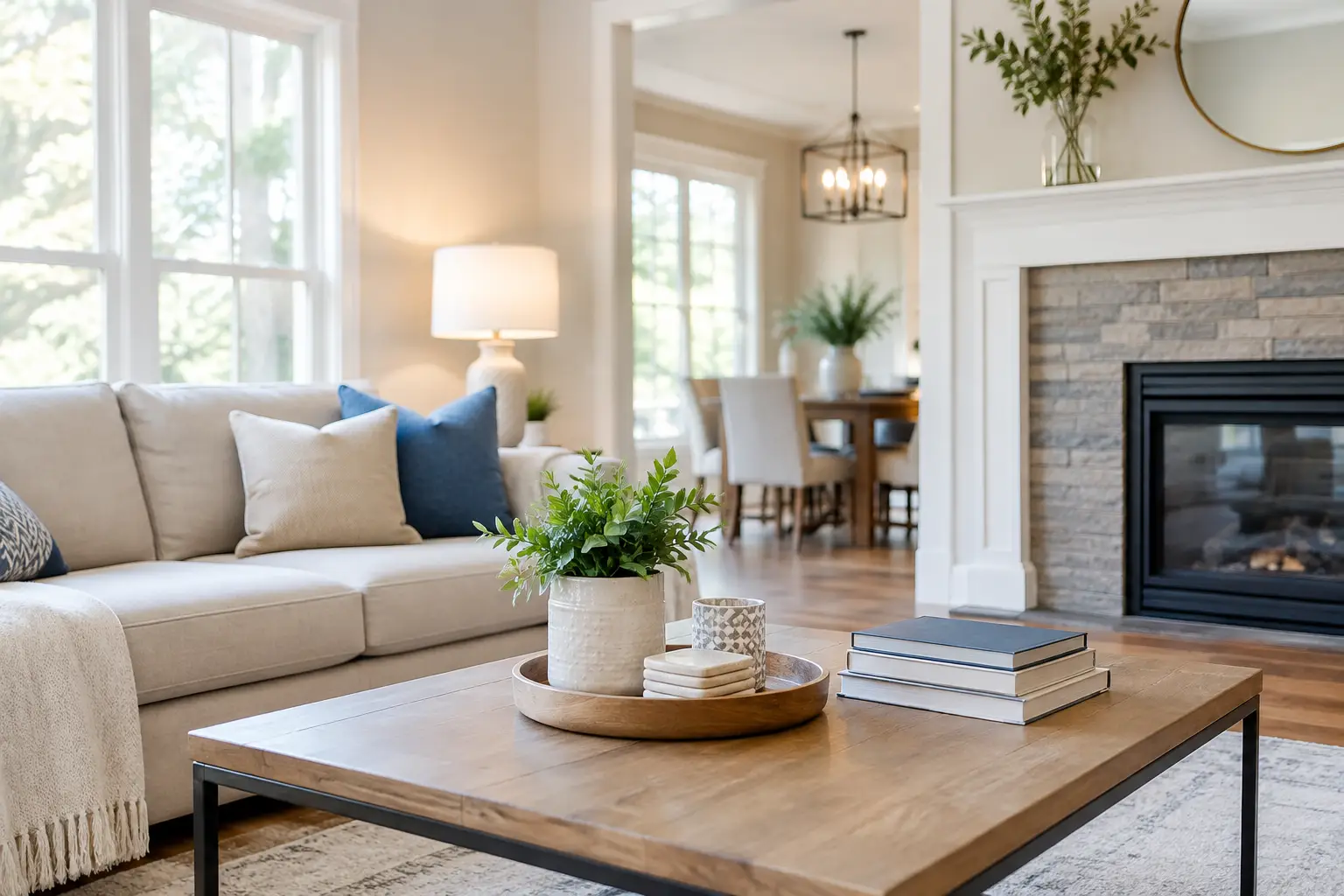
A buyer may spend only a few minutes deciding how a home feels before moving on to the next listing. That first impression starts online, continues at the front door, and shapes how buyers view every room that follows. The top home staging improvements are not necessarily expensive renovations. They are targeted changes that make a property feel clean, spacious, well cared for, and ready for its next owner.
For sellers in Anderson, Greenville, Pickens, and Oconee Counties, staging should reflect both the home and the buyer it is likely to attract. A Clemson-area townhome, an established Anderson neighborhood home, and a newer Greenville-area property may need different emphasis. The goal remains the same: help buyers quickly understand the lifestyle, space, and value your home offers.
Start With the Improvements Buyers Notice First
Before bringing in decorative accessories, address the details that can make buyers wonder whether larger maintenance issues are hiding behind them. Staging works best when it is paired with visible care. A beautifully arranged living room will not overcome a loose handrail, stained ceiling, worn caulk, or burned-out exterior light.
Walk through the home as if you were seeing it for the first time. Look for scuffed baseboards, chipped paint, sticky doors, outdated switch plates, and window screens that need attention. These are usually manageable repairs, but together they signal whether a home has been maintained. In a competitive market, buyers often use small visible defects to justify a lower offer or to move on quickly.
Fresh, neutral paint can offer one of the strongest returns when walls are heavily personalized, dark, or marked by everyday wear. Neutral does not have to mean stark white. Soft warm whites, light greige, and muted beige tones tend to photograph well and allow buyers to focus on flooring, windows, and room size. If the paint is in good condition and the color is broadly appealing, a full repaint may not be necessary. Selective touch-ups can be the smarter use of your budget.
Make the Entry Feel Easy and Welcoming
The approach to the front door sets expectations for the showing. Pressure-wash the walk, porch, siding where appropriate, and driveway if staining is noticeable. Trim shrubs away from walkways and windows, remove dead plants, and make sure house numbers are clear from the street.
At the door, replace a faded welcome mat, clean the glass, and confirm that the lock, bell, and porch light work properly. A freshly painted front door can be worthwhile when the existing finish is peeling or dated. Choose a color that complements the exterior rather than one that overwhelms it. Buyers should feel they are arriving at a cared-for home, not a project waiting to begin.
Create Space Before You Add Style
The most effective staging move is often removing items, not purchasing new ones. Buyers need room to picture their furniture, routines, and belongings in the house. Overfilled shelves, packed closets, and large furniture can make even a generously sized home feel limited.
Begin with the living room, kitchen, primary bedroom, and primary bath. These spaces carry significant weight in buyer decisions and in listing photos. Remove excess furniture to create clear walking paths and show the true scale of each room. A living room should demonstrate comfortable conversation space. A bedroom should feel restful rather than crowded. In the kitchen, clear most countertop appliances and personal papers so buyers see the available work surface.
Closets deserve special attention. Buyers will open them, particularly in homes where storage is a priority. Reduce clothing, organize shelves, and leave some open space. The message is simple: this home has room to support daily living. The same principle applies to the pantry, garage, laundry room, and linen closets.
Personal items should be minimized, but the home should not feel empty or impersonal. Family photos, collection displays, refrigerator magnets, and highly specific decor can distract from the property. Keep a few well-chosen pieces that add warmth, such as a simple throw, fresh towels, or a plant. The objective is a home with character, not a home that looks like no one lives there.
Use Each Room for Its Clearest Purpose
Buyers respond well when rooms answer practical questions immediately. A formal dining room should look ready for meals or entertaining. An extra bedroom might be shown as a guest room, nursery, or office, depending on the likely buyer. A finished bonus room can demonstrate media space, homework space, or a flexible area for hobbies.
This is especially useful when a room has become a storage area or has an unclear purpose. If a buyer cannot tell what a space is for, they may assume it is less useful than it actually is. In Upstate homes where remote work remains part of many households' routines, a clean, functional office setup can help buyers recognize the value of a spare room, loft, or flex space.
Do not force a use that does not fit the home. A small bedroom should not be crowded with oversized furniture simply to make it look like a full guest suite. Show the room honestly and attractively. Good staging clarifies potential without making promises the property cannot support.
Prioritize Light, Cleanliness, and Comfort
A bright home generally feels larger and more inviting. Open curtains and blinds before every showing, wash windows where needed, and replace dim or mismatched bulbs. Use consistent, warm-white lighting throughout the home. Avoid bulbs that create harsh blue light or noticeably different color tones from room to room.
If a room is naturally dark, use lamps to add layers of light rather than relying on one overhead fixture. Update an outdated light fixture when it is a clear visual distraction, particularly over a dining table, kitchen island, or entry. This is often a modest improvement with an outsized impact on photos and first impressions.
Cleanliness is not decorative, but it is essential staging. Deep-clean floors, bathrooms, kitchen surfaces, grout, appliance fronts, vents, and ceiling fans. Eliminate pet odors, cooking odors, smoke odors, and mustiness before the home is photographed or shown. Scented candles and strong air fresheners can create their own concern, so clean air is better than a heavy fragrance.
Temperature matters, too. A home that is too warm in a South Carolina summer or chilly on a winter showing can make buyers rush through a visit. Keep the interior comfortable and make sure the HVAC system is operating normally. If you have energy-efficient features, such as newer windows, a programmable thermostat, or updated insulation, make certain those benefits can be communicated clearly in the listing.
Stage the Kitchen and Bathrooms for Daily Living
Kitchens and bathrooms influence value perceptions more than almost any other rooms. They do not always require a renovation before listing. In many cases, clean surfaces, updated hardware, fresh caulk, and better lighting create a substantial improvement.
In the kitchen, clear counters except for a few intentional items. A simple bowl of fruit or a small plant can add life without creating clutter. Clean inside the microwave, oven, refrigerator, and dishwasher, because buyers may look closely. If cabinet doors are worn but structurally sound, refinishing or painting may help. Replacing all cabinets is a larger decision that should be weighed against the home's price range and expected return.
Bathrooms should feel fresh and easy to maintain. Remove personal care products, replace worn shower curtains, hang clean neutral towels, and address any sign of mildew or water damage. Small upgrades such as a new mirror, vanity light, faucet, or towel bar can help an older bath look more current. However, avoid spending heavily on a full bathroom remodel without reviewing comparable homes first. The best improvement depends on what buyers expect in that specific neighborhood and price point.
Do Not Forget Outdoor Living Areas
Upstate buyers often value usable outdoor space, whether that means a covered porch, fenced yard, deck, patio, pool area, or room for gardening and recreation. Stage these areas as living space, not storage space. Remove broken furniture, unused planters, hoses, and children's toys that overwhelm the yard.
A clean table and chairs can help buyers picture coffee on the porch or weekend gatherings with friends. If the yard is large, define a seating or play area so its scale feels purposeful. If it is smaller, demonstrate how easily it can be maintained. For homes near lakes, golf, trails, downtown amenities, campus, or commuter routes such as I-85 and I-385, the outdoor setting and location story can be just as meaningful as interior finishes.
Match the Staging Budget to the Home and Market
Not every seller needs professional staging throughout the home. Vacant properties, higher-priced homes, unusual layouts, and listings with dated furnishings often benefit most from professional help. For an occupied home with attractive furniture and a strong layout, a consultation followed by strategic decluttering may be enough.
Spend first on repairs, cleaning, paint, lighting, curb appeal, and furniture reduction. These improvements support nearly every buyer's experience. Decorative upgrades should come after the fundamentals are handled. A listing strategy should also account for current competing inventory, likely buyer demand, and realistic pricing. The Sheila Newton Team has helped Upstate sellers prepare and position homes since 1989, with local guidance that connects presentation decisions to the market around your property.
Before photographs are taken, stand at the curb one more time and ask a practical question: would a buyer be eager to see what is inside? When the answer is yes, the showing has a stronger start. A well-prepared home gives buyers fewer reasons to hesitate and more reasons to imagine making it their own.

Sheila Newton
Realtor | Sheila Newton Team | Howard Hanna Allen Tate Real Estate
or another way